What Is a Maturity Model? Origins and Core Logic
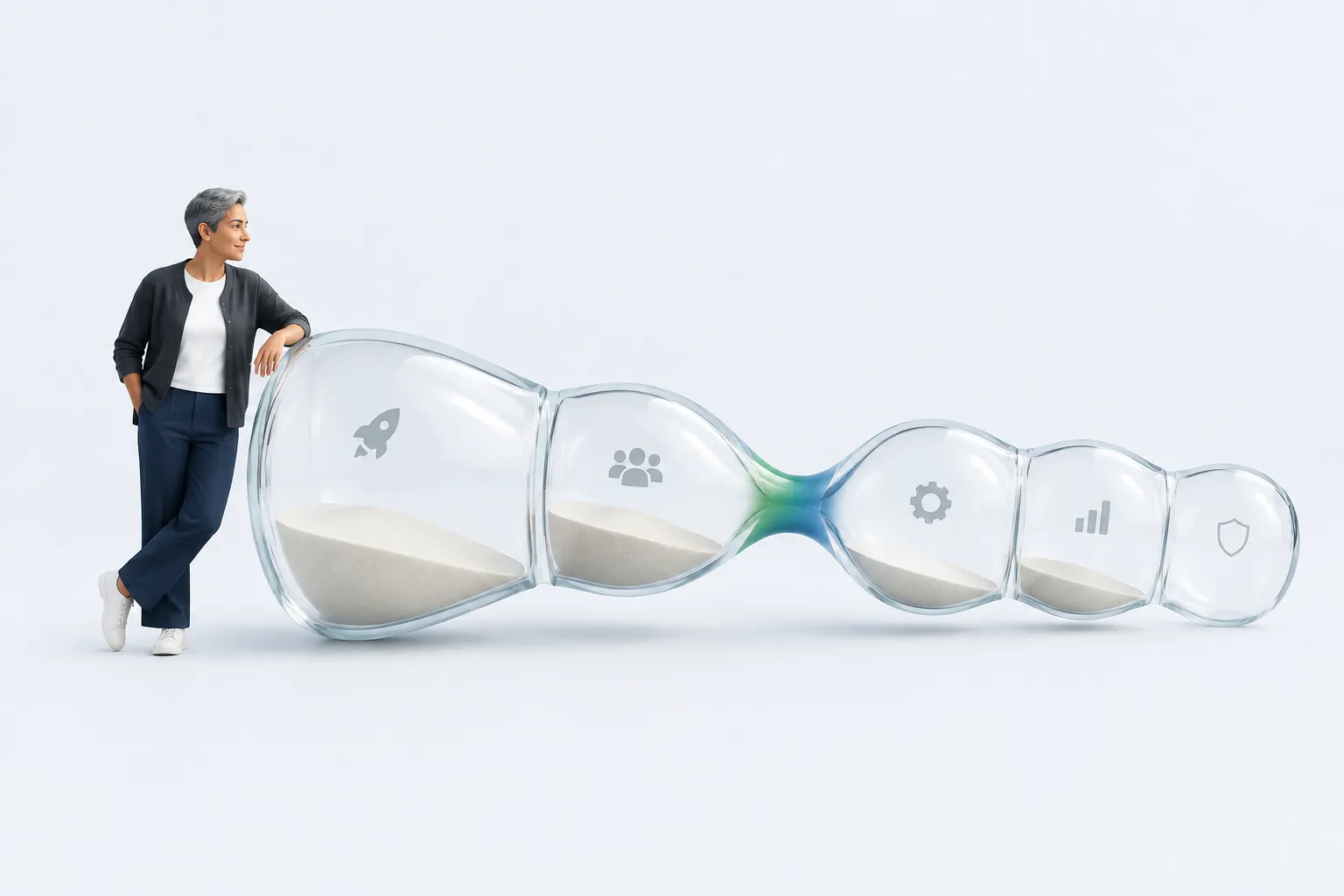
What is maturity model? At its core, it's a staged framework that defines discrete levels of capability an organization can be measured against, then used as a roadmap for improvement rather than a one-time score.
The classic reference case is CMMI, the Capability Maturity Model Integration framework originally built for software and process engineering. CMMI defines five maturity levels, numbered one through five, that organizations use to appraise where they stand, then to identify strengths, weaknesses and opportunities for process improvement.
Even within a well-established model like CMMI, research summarized by the Software Engineering Institute indicates that moving up a level doesn't guarantee better performance for every organization; effects vary by company size and context. That caveat matters just as much when applying the same logic to AI.
Sources: Capability Maturity Model Integration - Wikipedia
3 Levels of AI Maturity, Simplified

AI maturity models borrow this staged logic but swap process-engineering criteria for AI-specific ones. One widely cited example, the MIT CISR Enterprise AI Maturity Model, describes four stages spanning workforce education, piloting, enterprise-wide scaling and embedded AI-supported decision-making, built from a 2022 survey of 721 companies plus 2024 executive interviews.
For simplicity, this guide groups that kind of progression into 3 levels of AI maturity: early experimentation and learning, focused piloting, and scaled or embedded use. It's an editorial simplification meant to aid explanation, not a substitute for any single published model.
A Simplified Three-Level View of AI Maturity
- Explore: Teams experiment with AI tools and build foundational skills before wider rollout.
- Pilot: Selected use cases are tested against real workflows with early governance guardrails.
- Scale & Embed: AI-supported skills and decisions extend enterprise-wide and become part of routine work.
Describing that opening stage at the EmTech MIT conference, MIT CISR researcher Peter Weill characterized it this way:
“This first stage is all about experimenting, preparing, and education”
— Weill, Researcher with MIT Center for Information Systems Research (CISR), co-author of the MIT CISR Enterprise AI Maturity Model research briefing · Source: What’s your company’s AI maturity level? | MIT Sloan
Sources: What’s your company’s AI maturity level? | MIT Sloan
Where AI Maturity Diverges: People, Culture and Governance
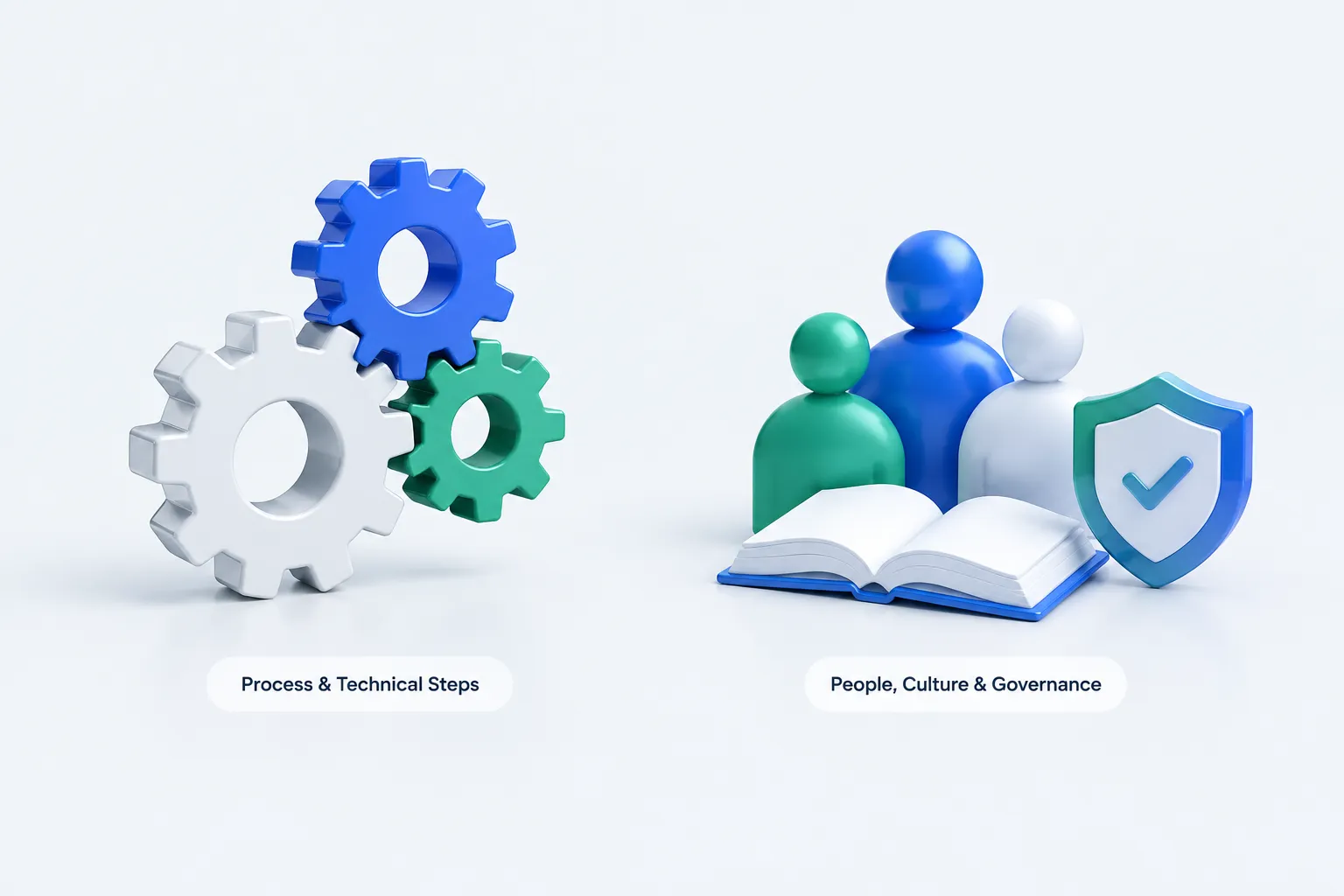
Revisiting what is maturity model helps explain why AI-specific versions add new dimensions. Generic process models like CMMI mostly assess whether defined processes are followed consistently. AI maturity models extend that idea to include people-side factors: employee skills, culture, leadership behavior and governance, because AI outcomes depend heavily on how people actually use the tools.
AI-specific governance has its own reference points too. NIST's AI Risk Management Framework is a voluntary framework intended to help organizations incorporate trustworthiness considerations into the design, development, use and evaluation of AI across its lifecycle. It complements maturity assessment rather than replacing it.
| Framework | Type | Primary focus | Covers people/culture? |
|---|---|---|---|
| CMMI | Staged maturity model (5 levels) | Software and process engineering discipline | Not documented |
| NIST AI RMF | Voluntary risk-management framework | Trustworthiness across the AI lifecycle | Not documented as a core dimension |
| MIT CISR Enterprise AI Maturity Model | Staged maturity model (4 stages) | Enterprise AI capability, from piloting to embedded use | Yes, includes culture and skill-building |
Sources: What’s your company’s AI maturity level? | MIT Sloan, AI Risk Management Framework | NIST
How to Read These Results: Self-Reported vs. Measured Data
Most AI maturity and adoption assessments rely on employee surveys, so it's worth naming a limitation plainly here: self-reported organizational data is subject to well-documented method and motivation biases that can distort what's actually being measured. A survey score reflects what employees report, not a verified, causal measurement of productivity.
In practice, that means results are useful for spotting direction and gaps, not for proving that a specific initiative caused a specific outcome. Pair what employees report with your own operational context before drawing conclusions.
When reviewing results, some questions worth asking as a starting point include the following, offered as suggestions rather than a validated instrument:
- Does this score reflect actual usage, or general enthusiasm about AI?
- Are skills gaps concentrated in specific teams or spread evenly across the organization?
- Has perceived impact been cross-checked against any operational indicator tracked separately?
- Is the sample large and varied enough to represent the whole organization?
Applying the Concept: Practical Steps for CIOs and CTOs
Knowing what is maturity model in the abstract is only useful once it's applied: staged benchmarks for gradual improvement give CIOs and CTOs a practical way to plan AI interventions rather than reacting to isolated requests. The steps below translate the concept from CMMI-style process assessment into something usable for AI adoption specifically.
Recurring measurement is what makes the model useful in practice. A single survey tells you where you stand today; repeated rounds, tracked over time, let leadership see whether AI skills, readiness and perceived barriers are actually shifting from one stage to the next.
Sources: Capability Maturity Model Integration - Wikipedia, What’s your company’s AI maturity level? | MIT Sloan
Frequently asked questions
Who inside a company should own an AI maturity assessment?
Typically a cross-functional owner such as the CIO, CTO or Head of L&D, since the assessment spans technical rollout, skills and governance. Assigning it to a single technical team risks missing the people-side dimensions the model is meant to capture.
How often should an organization re-run an AI maturity assessment?
There's no single fixed cadence, but running it repeatedly, for example every two to four quarters, lets leadership compare rounds and see directional movement across stages rather than relying on one isolated snapshot.
Does reaching a higher AI maturity level guarantee better business results?
No, and it shouldn't be treated as a stand-alone verdict. Use a maturity level alongside operational metrics, skills data and business outcomes you already track, so no single score drives investment decisions on its own. Combining signals gives a fuller picture than maturity level alone.
Can an AI maturity model replace a framework like NIST's AI Risk Management Framework?
No. NIST's AI RMF doesn't assign stages or a capability score, so it can't show where your organization currently stands. Pairing a staged maturity assessment with a risk-management framework like NIST's gives you both a current-state view and lifecycle risk guidance.
Sources: Capability Maturity Model Integration - Wikipedia, AI Risk Management Framework | NIST