Why Survey Employees Directly, and Who to Include
An AI readiness assessment that only interviews leadership misses half the picture: it tells you what executives believe is happening with AI adoption, not what employees actually experience day to day. Surveying employees directly closes that gap.
In Deloitte's August-to-September 2025 survey of 3,235 senior leaders across 24 countries, insufficient worker skills was identified as the top barrier to integrating AI into existing workflows. That finding reflects leadership perception, not a measured skills gap reported by employees themselves.
Because leaders and employees can see the situation differently, a useful assessment reaches beyond the executive suite. One AI advisory vendor's published framework (Data Society) recommends surveying employees specifically about current tool usage, confidence levels and workflow barriers, alongside separate audits of infrastructure, culture and leadership alignment.
- Frontline and operational staff who use AI tools in daily tasks
- Middle managers who influence team-level adoption
- Specialist teams such as IT, data or L&D with hands-on AI exposure
- A cross-section of tenure levels, from recent hires to long-tenured staff
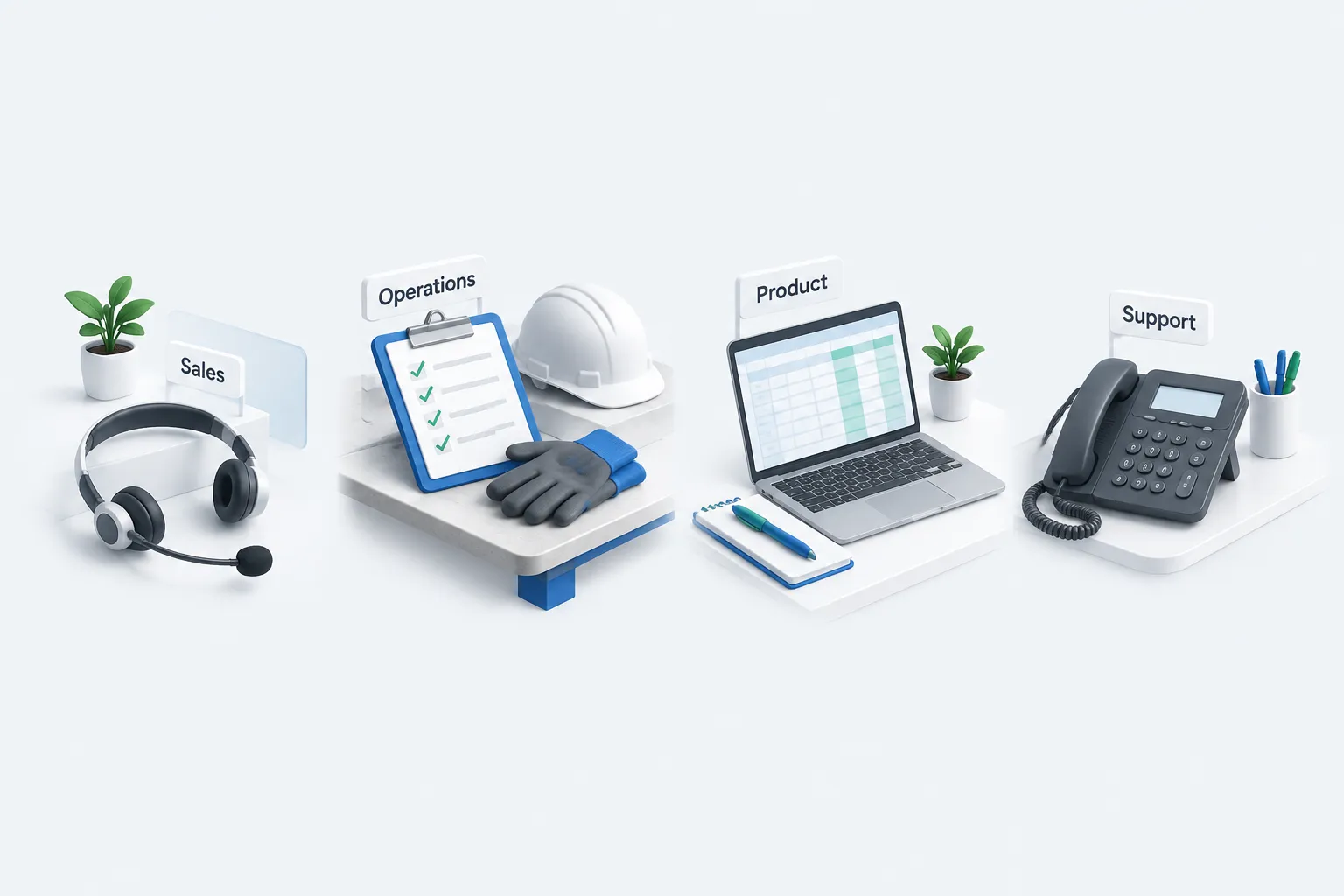
- Departments expected to differ, such as sales, finance, ops and support
Sources: The State of AI in the Enterprise - 2026 AI report | Deloitte US, How to Run an AI Readiness Assessment That Actually Tells You Something Useful
Core Themes an AI Readiness Assessment Framework Should Cover
A well-scoped AI readiness assessment framework organizes questions around a small number of themes rather than a long, unstructured list. Six themes cover most of what leaders need: usage, skills and confidence, workflow barriers, training received, leadership and manager support, and awareness of governance or usage policy.
On training, BCG's 2025 global AI at Work survey of more than 10,600 leaders, managers and frontline employees across 11 countries found that only about one-third of employees said they had been properly trained on AI tools. The same survey found regular AI use was reported as markedly higher among employees who had received at least five hours of training.
Leadership support and governance awareness matter too. According to Data Society's 2025 AI Readiness Report, 65% of leaders reported not knowing when or where to apply AI, which suggests employee-facing questions about manager guidance and policy clarity are worth including alongside usage questions.
Sources: How to Run an AI Readiness Assessment That Actually Tells You Something Useful, AI at Work 2025: Momentum Builds, but Gaps Remain | BCG
Editorial Sample Questions by Theme
The questions below are editorial suggestions to adapt, not a validated or tested instrument. Treat wording, scale and order as a starting draft for piloting, not a finished questionnaire ready for company-wide rollout. Whether you track responses in a spreadsheet or through an AI readiness assessment tool, the same wording risks apply.
Each row pairs a theme with one sample item and a suggested response format. Keeping response options short and using a consistent ordinal scale makes results easier to compare across teams and over time.
| Theme | Sample question | Suggested response options |
|---|---|---|
| Usage | How often do you use AI tools to complete work tasks? | Never / Rarely / Sometimes / Often / Daily |
| Skills and confidence | How confident do you feel using AI tools for your main job tasks? | Not at all confident to Extremely confident (5-point scale) |
| Workflow barriers | What is the biggest obstacle preventing you from using AI more in your role? | Short closed list, e.g., time, access, skill, trust, unclear use case |
| Training received | Have you received formal training on the AI tools available to you? | Yes, extensive / Yes, some / No |
| Leadership support | Does your manager encourage experimenting with AI tools for your work? | Strongly disagree to Strongly agree (5-point scale) |
| Governance awareness | Are you aware of your organization's policy on approved AI tool use? | Yes / No / Not sure |
Sources: How to Run an AI Readiness Assessment That Actually Tells You Something Useful
Question-Wording Pitfalls to Avoid
General survey-design guidance, as of 2024, cautions against combining two ideas into one question, since a respondent agreeing with one half but not the other cannot answer accurately. An AI readiness assessment is especially prone to this when usage and confidence get bundled into a single item.
The same guidance recommends keeping closed-ended answer lists short so respondents can process the options, and stresses that good measurement depends on clear, unambiguous, unbiased wording rather than leading phrasing that nudges toward a particular answer.
Sources: Writing Survey Questions | Pew Research Center, U.S. Survey Methodology | Pew Research Center
Running the Survey In-House: Cadence, Anonymity, Segmentation
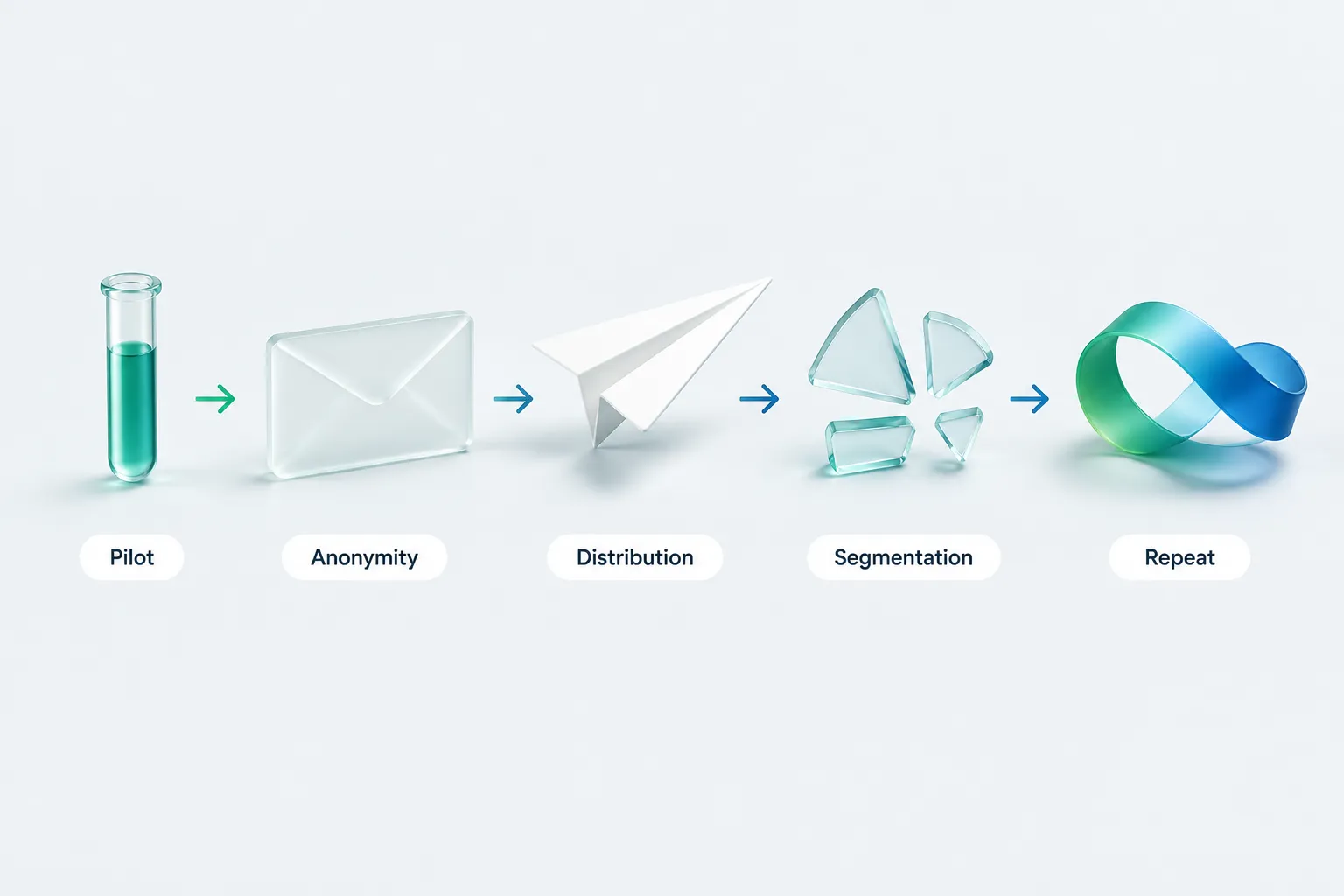
Turning sample questions into a working AI readiness checklist for rollout means deciding on process, not just wording. A short sequence of steps helps a Head of AI move from draft questionnaire to usable results without redesigning the survey each time.
Anonymity matters most for sensitive items, such as unsanctioned personal AI-tool use; a workplace-analytics vendor has noted that employees may otherwise underreport behavior they think is discouraged, reflecting social-desirability bias.
Running an in-house employee AI readiness survey
- Pilot: Test the draft questionnaire with a small, representative group to catch confusing or double-barreled wording.
- Anonymize: Offer anonymous or aggregated reporting, especially for sensitive usage questions, to reduce social-desirability bias.
- Distribute: Roll out the finalized survey to the full target population across departments and tenure levels.
- Segment: Break results down by department, role level and tenure to find where adoption or barriers diverge.
- Repeat: Re-run the same wording and scales on a recurring cadence, such as quarterly or twice yearly, to track change over time.
Interpreting Results: Self-Reported Perception vs. Verified Behavior
How to read these results: everything a survey like this produces is self-reported perception, not measured behavior or proven productivity impact. A workplace-analytics vendor has argued that self-reported AI usage can be distorted by social desirability bias, where people over-report behaviors seen as favorable, and by simple recall error.
This does not make the survey useless. It means results should be labeled as employees' reported usage, confidence and perceived barriers, and used to prioritize where to investigate further or intervene, rather than treated as an audited fact.
With that framing, an AI readiness assessment becomes a recurring input for decisions: which teams need training, where managers should clarify AI policy, and which barriers deserve attention next quarter.
Frequently asked questions
Who should own the AI readiness assessment inside the organization?
Editorial guidance suggests a Head of AI, CIO/CTO, Head of L&D or Chief People Officer typically owns it, since results inform training, tooling and policy decisions. Whoever owns it should coordinate with the others so findings translate into action.
How long should the survey take employees to complete?
No supplied source specifies an ideal length, but keeping closed-ended questions with short answer lists, as general survey-design guidance recommends, helps keep completion time manageable and response quality higher.
Should contractors and part-time staff be included, not just full-time employees?
This is an editorial judgment call: including a broader workforce can reveal adoption gaps tied to tenure or employment type, but the supplied sources do not establish a validated rule for who must be included.
Can survey results alone justify a specific training investment?
Not on their own. Employees reported training gaps and usage differences in industry surveys, which help prioritize where to look next. Justifying a specific investment typically also calls for pilot results, manager observations or usage data that corroborate the survey signal before committing budget.
Sources: Writing Survey Questions | Pew Research Center, AI at Work 2025: Momentum Builds, but Gaps Remain | BCG