Helping small businesses put AI to work, officially
Your SBDC contact forwards a headline: OpenAI says it's helping small businesses put AI to work, and asks whether it changes your rollout plans for the year. Before you answer, here's exactly what the OpenAI small business AI announcement changes, who it touches, and where it stays quiet.
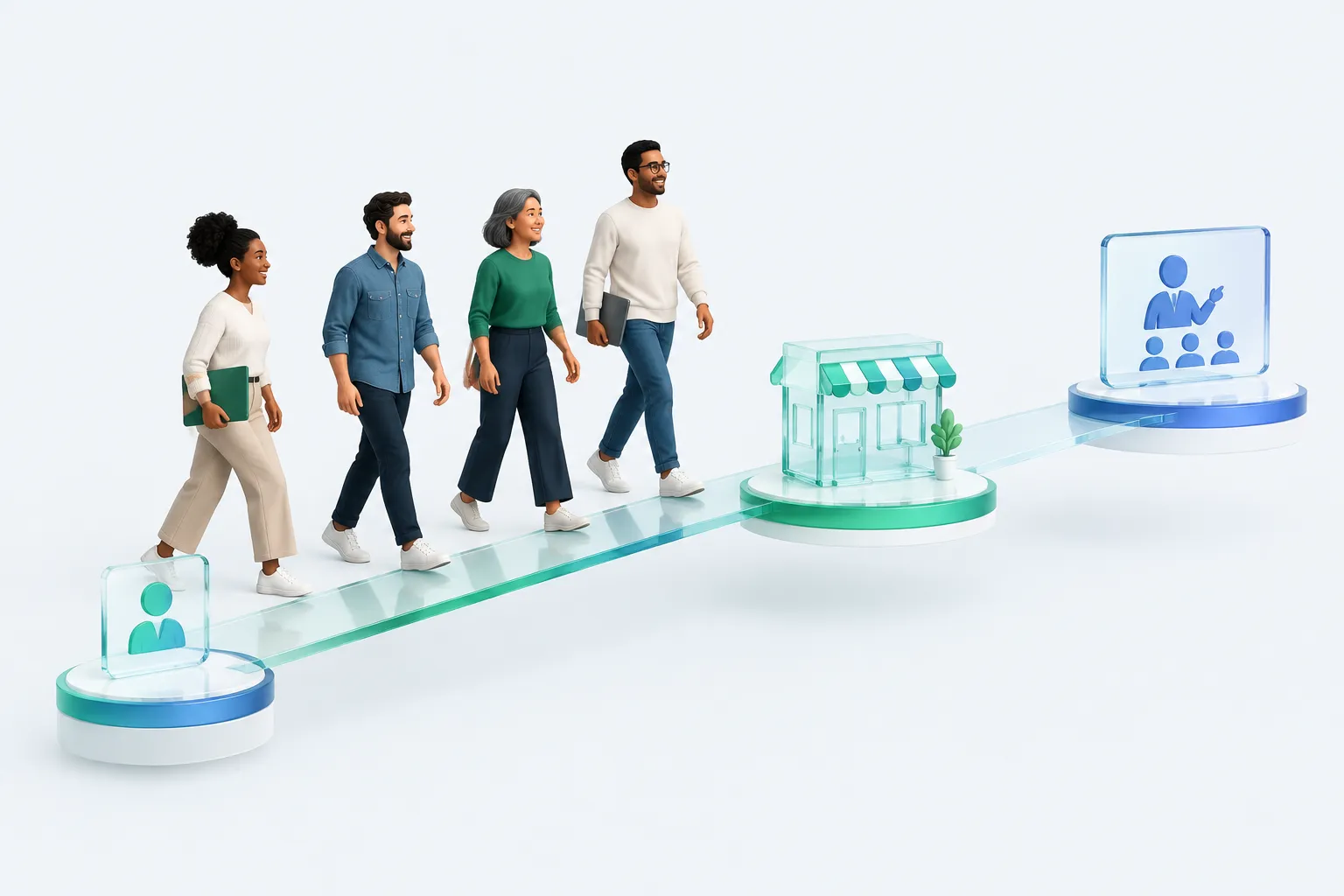
On September 30, 2026, OpenAI announced a new partnership with America's SBDC, the national network of small business development centers, according to OpenAI's own announcement. This OpenAI small business update 2026 pilot is intentionally narrow: OpenAI plans to train around 150 SBDC advisors through its Community Trainer Program in this initial phase.
The stated goal for this first phase is to reach at least 1,000 small businesses through in-person training sessions, with more reached through one-on-one advising and existing resources, OpenAI says. The framing is squarely about helping small businesses put AI to work at the local level, through advisors business owners already trust.
- New partnership announced September 30, 2026, with America's SBDC
- Around 150 SBDC advisors to be trained in the initial phase through OpenAI's Community Trainer Program
- Goal of reaching at least 1,000 small businesses through in-person training, plus more through advising and resources
- Readers are pointed to explore existing tools and resources or join an upcoming webinar
Sources: Helping small businesses put AI to work | OpenAI
Who the partnership actually reaches
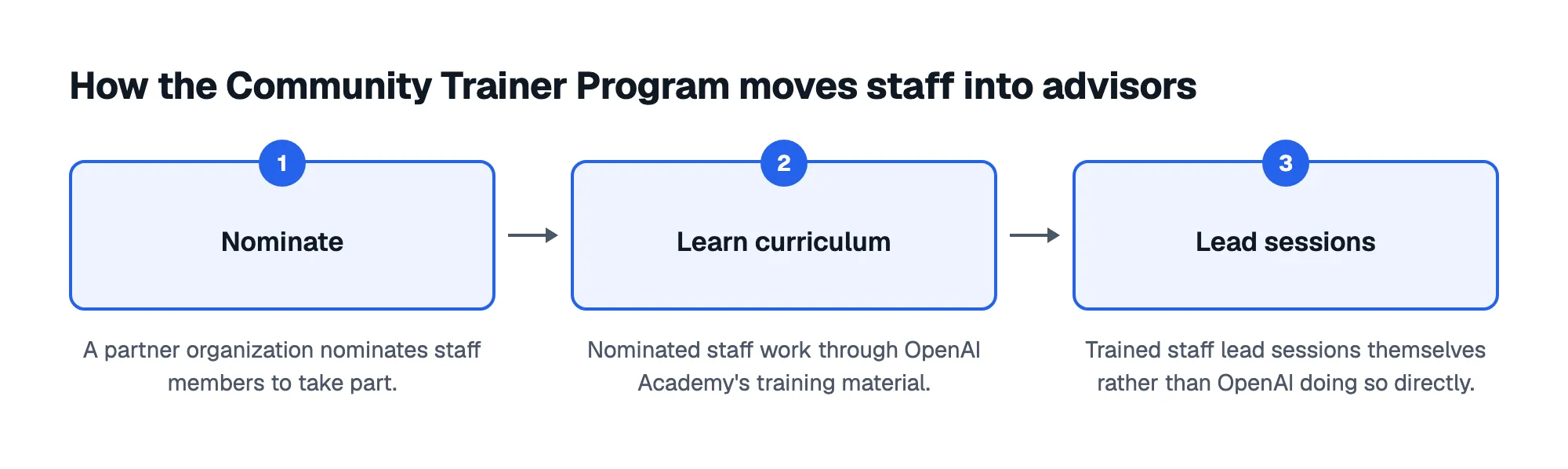
The direct audience is SBDC advisors themselves: staff nominated by their centers to learn OpenAI's curriculum and then lead sessions for the businesses they already serve, per OpenAI's announcement. Small business owners and entrepreneurs reach the program secondhand, through their local center rather than a direct OpenAI relationship.
In our view, 150 advisors and a 1,000-business goal is a reasonable first phase, not evidence of broad market reach yet; we'd treat this as a pilot to watch, not a shift in what's already available to every small business.
The announcement doesn't name which state or local SBDC offices are part of this initial pilot, when their workshops begin, or what eligibility looks like for advisors or businesses. Because America's SBDC is a U.S. network, check with your local center rather than assuming your organization is already covered.
Sources: Helping small businesses put AI to work | OpenAI
How the advisor training itself works

Under OpenAI's Community Trainer Program, the model this partnership uses, partner organizations nominate staff to learn the Academy curriculum before leading sessions themselves, OpenAI states. OpenAI Academy, the platform behind that curriculum, has run since September 2024, per OpenAI's own account.
OpenAI also describes Academy as relaunched in 2025 as a free online resource hub, a separate piece of background on the broader program rather than a detail specific to the SBDC partnership.
In a separate OpenAI announcement about scaling Academy more broadly, one Academy partner described the stakes in personal terms.
“The future belongs to those who understand AI and we’re making sure that AI literacy and education are accessible to everyone.”
— Pedro Santos Acosta, Executive Director of Emerging Technologies at Miami Dade College, as stated on the OpenAI page · Source: Scaling the OpenAI Academy: A new hub for AI literacy and community learning | OpenAI
That broader Academy context is useful for understanding the training model, but it predates this specific SBDC deal by six months to over a year, so treat it as background, not confirmation of SBDC-specific details.
Sources: Two years of OpenAI Academy | OpenAI, Scaling the OpenAI Academy: A new hub for AI literacy and community learning | OpenAI
What to do inside your organization now
OpenAI's own call to action is simple: explore its existing tools and resources for small businesses, or join an upcoming webinar, per the announcement. For a CIO or Head of AI already helping small businesses put AI to work inside your own organization, that's a starting point for vetting material, not a governance plan.
We'd skip waiting on the pilot's rollout timeline before building internal AI skills: OpenAI's resources and webinar are open now, regardless of whether your local SBDC is part of this initial cohort.
Sources: Helping small businesses put AI to work | OpenAI
What the announcement doesn't tell you
OpenAI's announcement doesn't state pricing, whether SBDC-trained advising is free to business owners, or what happens once the pilot phase ends. It also doesn't say whether the model will extend beyond America's SBDC to other countries or partner networks.
The report's customer examples are self-reported accounts from named businesses about what worked for them, not a controlled study of typical results, so treat them as illustration rather than evidence of what your own team would see.
Sources: Helping small businesses put AI to work | OpenAI
Measure your own team's AI adoption, not just OpenAI's
The question every rollout owner asks is what changed OpenAI small business AI support, exactly, and the honest answer is distribution: a named advisor network, not a new proof point about your own team's readiness.
In our view, a named partnership is good news for training access, but it's not a substitute for knowing where your own people stand on skills, usage and barriers before you commit budget.
AI Adoption Score offers 9 predefined survey types, letting you see where your team already stands on usage, skills, readiness and perceived barriers before layering on new SBDC-linked or vendor-led training.
Sources: Helping small businesses put AI to work | OpenAI
Frequently asked questions
Does this OpenAI partnership mean free AI training for every small business?
Not as stated. The announcement describes an initial phase training around 150 SBDC advisors with a goal of reaching at least 1,000 businesses through in-person sessions, plus more through advising and resources, not a universal free-training offer.
Who decides which SBDC advisors get trained?
America's SBDC plans to select advisors for the OpenAI Academy training and credentialing pathway, per OpenAI's announcement. Selected advisors then work through the curriculum and prepare to lead sessions themselves, rather than OpenAI training business owners directly.
Should our team wait for this pilot before starting AI training?
No, this pilot only affects whether your local SBDC office can offer OpenAI-led advisor sessions; it says nothing about what your own team needs. A more useful move than waiting is checking where your people already stand on AI skills and usage, so you can judge any future SBDC-linked session against a real baseline rather than a guess.
What if my business isn't served by an SBDC advisor at all?
The announcement only describes reach through SBDC advisors and the relationships they already have with business owners, so it doesn't address businesses outside that network. Your own AI training and tooling decisions don't need to wait on SBDC coverage either way.
Sources: Helping small businesses put AI to work | OpenAI, Two years of OpenAI Academy | OpenAI