
The Gallup AI Job Fear Survey: A New High in Worker Anxiety
The Gallup AI job fear survey, announced September 15, 2026, reports that 27% of U.S. workers now worry technology could make their job obsolete. Gallup states this is the highest level recorded since it began tracking the question, based on telephone interviews with 507 employed adults conducted between August 3 and 24, 2026.
When Gallup first asked this question in 2017, only 13% of workers shared that worry, according to Gallup's 2026 report on the trend since then. The rise from 13% to 27% is a meaningful shift, though Gallup notes a sampling margin of error of about six points for the employed subsample.
Sources: More U.S. Workers Fear Losing Their Jobs to Technology
Who Is Most Affected: Younger Workers
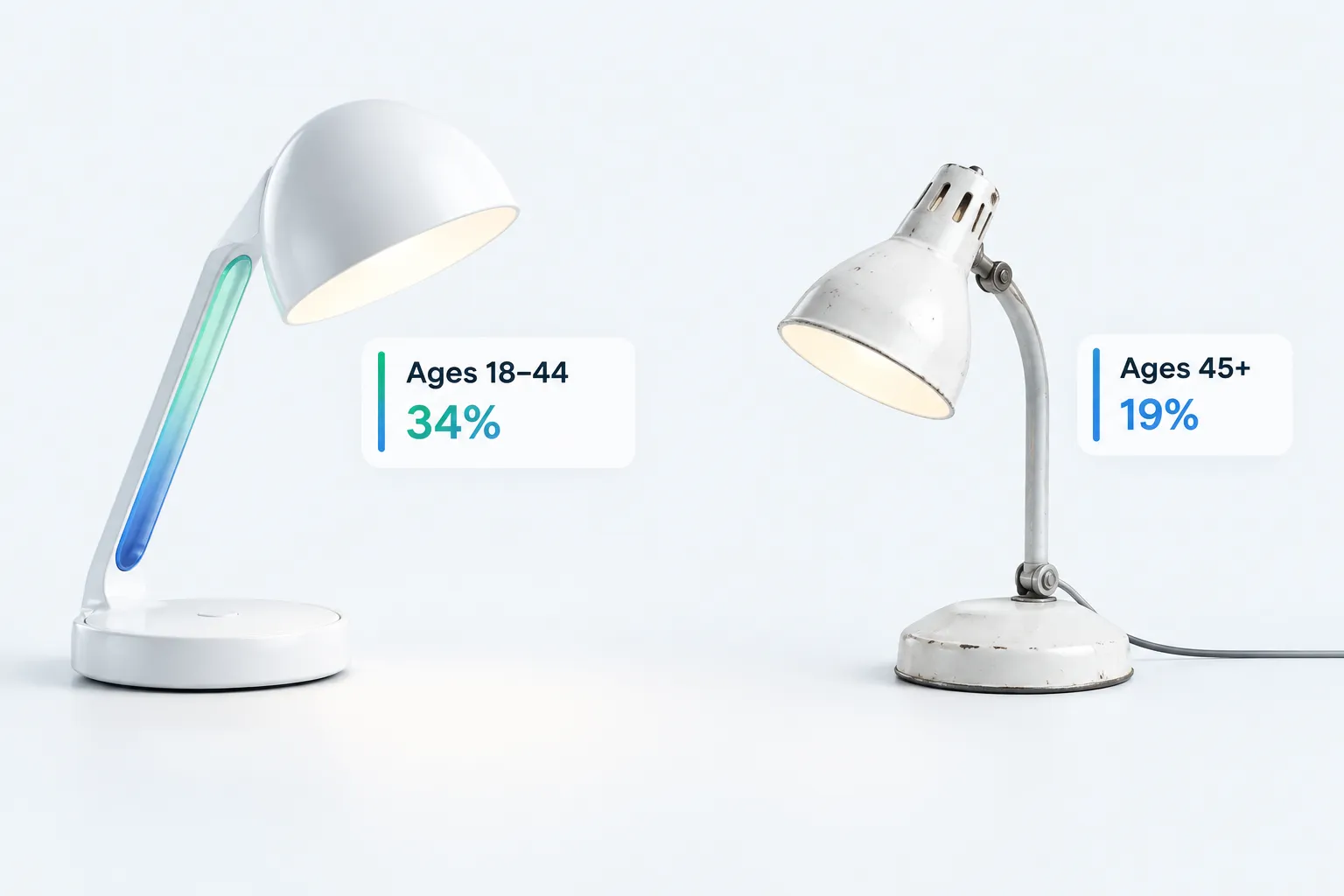
The Gallup AI job fear survey shows that fear of technology-driven job loss is not spread evenly across the workforce. Workers ages 18 to 44 are far more likely to worry than workers 45 and older, at 34% versus 19% respectively, according to the announcement.
The pattern in AI job displacement worker sentiment differs sharply along generational lines, as the announcement's age breakdown shows. Gallup does not break results down by industry, state or company size, so leaders cannot infer their own organization's exposure directly from this national data.
Sources: More U.S. Workers Fear Losing Their Jobs to Technology
How This Compares With Traditional Job Worries Employers Track
Gallup's announcement does directly compare technology-driven job worry with four traditional employment concerns it tracks: benefit reductions, layoffs, reduced hours and lower wages. According to Gallup, worry about technology has grown enough that it now exceeds most of these longstanding concerns, which the announcement says have stayed comparatively stable over the past year.
These four traditional measures date back to Gallup's original 1997 baseline, giving them a much longer trend history than the technology question, which Gallup introduced in 2017. That difference in measurement history is a useful reference point when comparing the two categories of concern over time.
Sources: More U.S. Workers Fear Losing Their Jobs to Technology
What Gallup Says Is Still Unknown
Gallup's announcement is explicit that one central question remains unresolved: whether employers will use AI to replace workers outright or to reshape and refine existing roles. That choice, Gallup says, will determine whether current worker anxiety proves justified.
The announcement does not address non-U.S. workers, international editions of the survey, or any employer-side survey. Gallup also does not state whether a hosted or ongoing version of this measure exists; those points are simply not addressed in this release.
Sources: More U.S. Workers Fear Losing Their Jobs to Technology
How to Read These Results: The Gallup Workplace AI Survey Data
It helps to separate what people report feeling from what can be verified directly. The Gallup AI job fear survey captures self-reported worry gathered through telephone interviews, not a count of actual layoffs or a documented case of technology replacing a job. This shows how workers fear losing jobs technology might automate, even though that fear is not yet matched by documented job losses.
The same caution applies to claims about AI's benefits. In a related Gallup workplace AI survey of employees at organizations already using the technology, only 17% of frequent users rated its productivity impact at the highest level, and Gallup itself cautions that efficiency and productivity claims need clearer evidence than perception data alone can provide.
Sources: More U.S. Workers Fear Losing Their Jobs to Technology, Employee Engagement Remains Flat as AI Adoption Accelerates
What Leaders Should Do Now

Gallup's announcement does not prescribe organizational actions; what follows is editorial guidance drawn from the patterns it describes, not advice from Gallup itself.
Manager behavior appears to matter well beyond this single reading. Gallup's separate workplace AI research found that employees whose manager actively supports AI use are far more likely to become frequent users than those without that support, a pattern relevant to how leaders might address the anxiety this survey captures.
“Organizations that want AI adoption to grow should start by equipping their managers.”
— Andy Kemp, Research Analyst at Gallup, credited as author of the page · Source: Global Indicator: Artificial Intelligence - Gallup
Sources: AI in the Workplace: What Separates Adopters and Holdouts
Frequently asked questions
Does Gallup's September 2026 survey break down results by industry or company size?
No. The release breaks results out only by age and education, not industry, state or company size. Because it draws on a national sample, it isn't designed to represent any single organization or sector, so leaders would need their own data to assess organization-specific exposure.
How often does Gallup run this job-loss-fear question?
Gallup has asked this question periodically since first introducing it in 2017, with the current reading from August 2026. The September 2026 release doesn't commit to a fixed future cadence, so readers should watch for new Gallup releases rather than assume a set annual schedule.
Should we survey our own employees about AI-related job fears?
That's a reasonable step since national figures can't reveal team-level patterns. Beyond exposure alone, an internal survey can also connect job-security sentiment to how confident employees feel using AI tools, which the Gallup release doesn't measure.
Is fear of job loss the same as fear of AI in general?
Gallup's release focuses specifically on worry that technology, including AI, could make a job obsolete; it doesn't separate this from broader attitudes toward AI tools or measure how often employees use AI themselves.
Sources: More U.S. Workers Fear Losing Their Jobs to Technology